

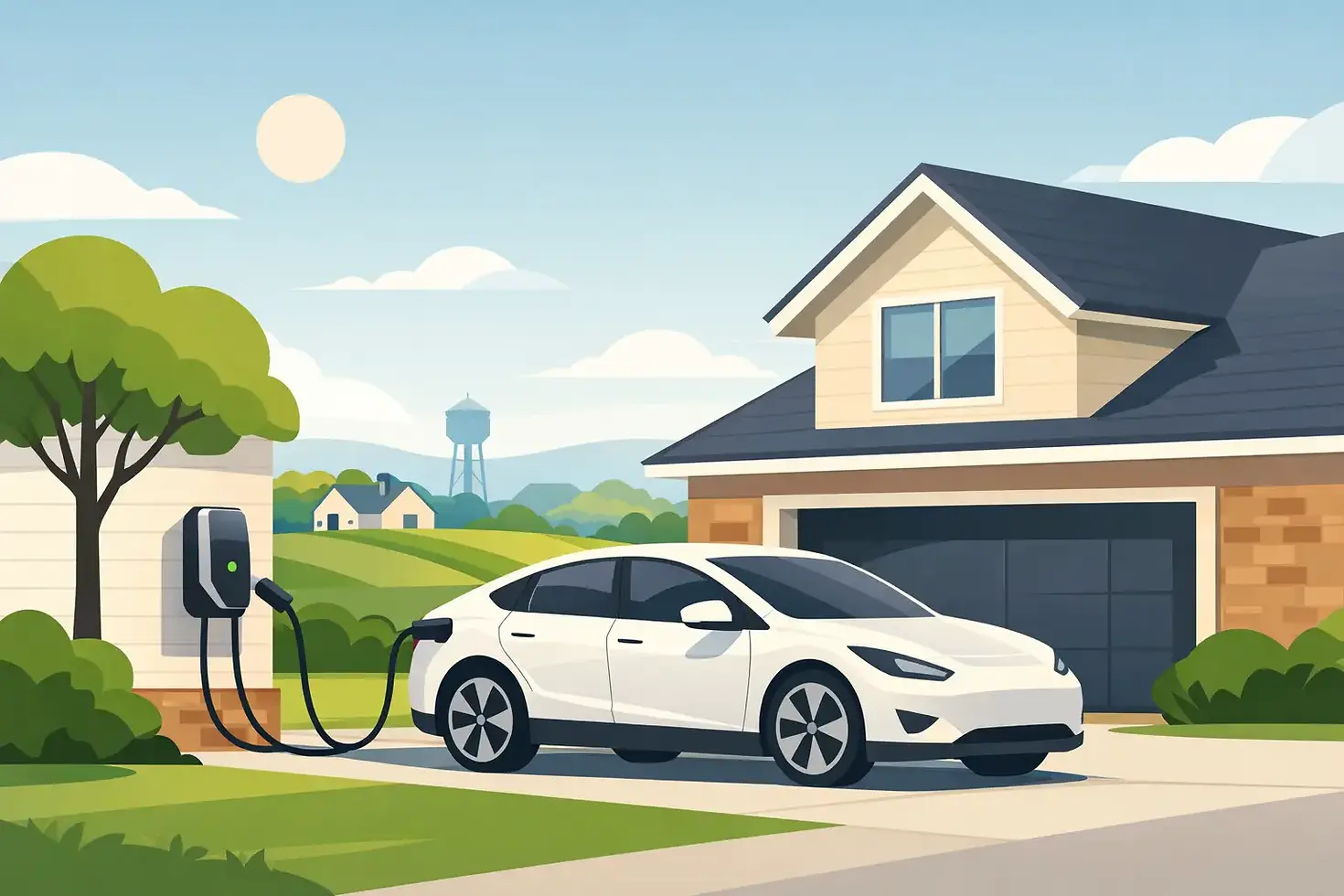
EV Charger Installation for Chesterfield Homes

A home charger changes the everyday experience of owning an electric vehicle. Rather than planning journeys around public charging availability, you can return home, plug in and wake up with useful range ready for the next day. For EV charger installation at a Chesterfield home, however, the charging point itself is only part of the decision. The condition of your electrical installation, the route for cabling and the way your household uses electricity all affect what a safe, reliable installation looks like.
A properly planned installation should suit the property now and remain practical if your driving habits, vehicle or electricity tariff change later. That starts with a site survey rather than selecting a charger on appearance or price alone.
EV charger installation for Chesterfield homes: start with the survey
Every property has different electrical constraints. A newer home with a modern consumer unit and an integral garage may allow a straightforward installation. An older terrace, a detached garage, a long driveway or an existing consumer unit with limited spare capacity can require more planning.
During a professional survey, the electrician should assess the incoming electrical supply, earthing arrangements, consumer unit, available circuit capacity and the proposed cable route. They will also consider where the vehicle will normally be parked, whether the charger can be mounted at a sensible height and how the cable can be installed neatly without creating a trip hazard.
This is where apparent savings can become false economy. A cheaper quotation that assumes a short, simple cable run may not account for external trenching, surface protection, a garage supply upgrade or remedial work at the consumer unit. A clear scope of work gives you a more useful price and avoids surprises once installation begins.
For homes with solar panels, battery storage or a heat pump, the wider energy picture matters even more. These systems can work well alongside EV charging, but the electrical demand needs to be assessed as one system rather than as a series of separate additions.
Choosing the right charger for how you drive
Most domestic chargepoints are either 7kW units, which are commonly suited to overnight charging, or lower-power options where the supply or household demand makes this more appropriate. The best choice depends on your vehicle, how far you travel, when you are at home and the capacity available at the property.
A 7kW charger is often a practical option for drivers who can leave the car connected overnight. It provides considerably more charging capability than a standard three-pin socket, while using equipment designed for regular EV charging. It is not always the right answer, though. If your home has supply limitations or high existing electrical demand, load management may be needed to prevent the charger placing unnecessary strain on the installation.
Tethered chargers have a fixed cable attached, which many drivers find convenient. Untethered units use the cable supplied with the vehicle and can look tidier when not in use. Neither is inherently better. The decision usually comes down to convenience, cable length, storage and how more than one household vehicle may be used.
Smart functionality is also worth considering. A smart charger can schedule charging for cheaper off-peak periods, subject to your electricity tariff, and may adjust output in response to household demand. This can help manage running costs, particularly where a vehicle is regularly charged at home. Features vary between products, so it is sensible to focus on functions you will genuinely use rather than paying for technology that adds little value.
Electrical capacity and safety cannot be guessed
An EV charger is a significant additional load. A domestic electrical installation may already support an electric shower, oven, induction hob, tumble dryer, heat pump and other high-demand equipment. The fact that these appliances are not all used continuously does not remove the need for a proper assessment.
Load balancing, sometimes called dynamic load management, monitors or accounts for household demand and can reduce the charger output when demand elsewhere in the home is high. When demand falls, charging can increase again. This can be a sensible solution where upgrading the incoming supply is not immediately necessary.
The installation should also include the correct protective devices and earthing provisions for the chosen chargepoint and property. Modern EV installations have specific safety requirements, including protection measures that differ from an ordinary outdoor socket circuit. The design must be based on the manufacturer’s instructions, the existing installation and current electrical requirements - not a one-size-fits-all approach.
If the consumer unit is old, overcrowded or shows signs of deterioration, the right course may be to address that first. This does not automatically mean a full rewire is required, but it does mean the charger should not be fitted onto an electrical system that cannot support it safely.
Think about positioning before work begins
The ideal location is usually close enough to where the vehicle parks to keep the cable run sensible, while ensuring the cable does not cross a public pavement or obstruct a shared access. If you park on the road rather than within your boundary, home charging can be more complicated. Cables should never be run across a pavement, even temporarily, as this creates a risk to pedestrians and may breach local requirements.
A charger on the front elevation can be convenient, but homeowners may prefer a side wall, garage or purpose-built post to keep it discreet. The proposed location needs to be weather-appropriate, accessible for daily use and protected from avoidable impact damage. For detached garages and outbuildings, the condition and capacity of the existing supply should be checked before assuming it can take a charger.
Cable routing deserves the same attention. A neat route may involve lifting and reinstating sections of paving, installing suitable external containment or running cable through a garage. The best route balances appearance, protection, cost and future maintenance.
Compliance, paperwork and long-term confidence
A compliant installation is about more than fitting a unit that turns on. Electrical work should be tested on completion, with appropriate certification provided for the work carried out. Depending on the work and property, notification requirements may also apply. Using a competent installer helps ensure this process is handled properly.
Keep the installation certificate, charger instructions and any commissioning records in a safe place. They are useful for future electrical work, selling the property, diagnosing a fault or confirming what has been installed. It is also worth registering the product warranty where required by the manufacturer.
Charging equipment should be inspected if it becomes damaged, repeatedly trips, shows signs of overheating or has been struck by a vehicle. The charging lead should be treated as working electrical equipment: avoid tightly kinking it, close doors on it or leaving it where it can be driven over.
Budget for the full project, not just the unit
The final cost of an EV charger installation depends on more than the model selected. The distance from the consumer unit to the parking position, wall construction, access, external works, electrical upgrades and the need for load management can all affect the price.
When comparing quotations, check whether they include the charger, installation labour, cable length, protective devices, testing, certification and any assumptions about the route. Ask what would count as additional work. This gives you a fairer comparison than simply choosing the lowest headline figure.
Plexus Electrical Ltd provides tailored EV charging installations with the survey, electrical safety and practical day-to-day use of the property in mind. The aim is not merely to install a charger, but to leave you with a reliable charging arrangement that fits your home and your routine.
A charger should make electric driving easier from the first evening you use it. Give the survey the attention it deserves, and the result is a safer installation, clearer costs and a charging point that remains useful long after the first plug-in.


Comments